
Introduction:
The difference between what you think you spend and what you really spend is a common financial blind spot. The solution is not a stricter budget or more willpower. Instead, it’s about finding an easy way to track your spending habits.
This guide covers the easiest ways to track your spending, from using a simple notebook to the best apps to try in 2026. With these tips, you can finally see a clear and honest picture of your money.
You don’t have to be a math whiz to do this well. You don’t need a finance degree, fancy spreadsheets, or to spend hours every weekend. What matters is finding a system that’s simple enough for you to stick with, even after a few months. That’s the real secret for people who keep track of their money over time—the method they use is simple and steady enough to last.
Why Learning to Track Spending Habits Matters More Than You Think
Before we talk about tools and methods, it’s useful to see why this habit matters so much.
Tracking your spending isn’t about feeling guilty or limiting yourself. It’s about being aware. When you know where your money goes each week, you stop guessing and can make better choices. Maybe you cut back on food delivery, notice a forgotten subscription, or just see that you’re already on track.
Recent research on financial behavior shows that many adults experience money stress because they are unsure where their money goes. Unclear spending can lead to overdraft fees, missed savings goals, and a feeling of losing control of their finances.
Tracking your spending regularly can reveal patterns within a few weeks, such as higher weekend spending or multiple small subscriptions adding up.
Tracking also creates a psychological shift: instead of spending passively, you begin making intentional decisions about your money. This can help you save, pay down debt, and feel more financially in control.
Remember, tracking and budgeting are different but connected. Tracking shows where your money is going, while budgeting helps you decide where it should go. That’s why tracking your actual spending should come before creating a realistic budget.
How to Set Up a System to Track Spending Habits in Five Simple Steps
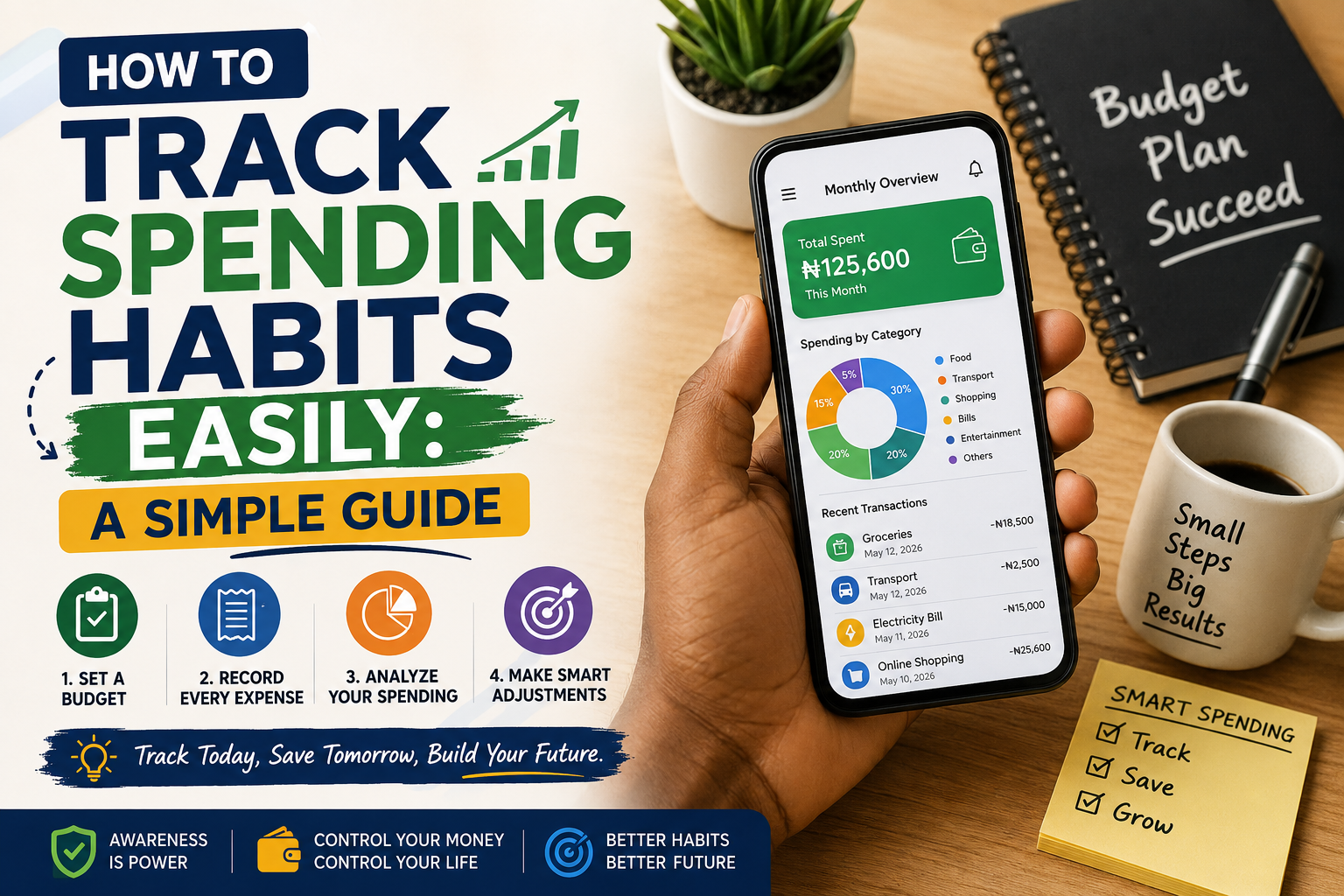
When you’re just getting started, it’s better to follow a simple plan instead of aiming for a perfect system right away. Here’s an easy way to get going:
- Choose your method: Choose a notebook, spreadsheet, or app depending on how much manual effort you want to put in each week.
- Gather your accounts: Write down all the checking accounts, savings accounts, and credit cards you use regularly. If you forget to include one, you might miss a big part of your spending.
- Track everything for two to four weeks without judging it: Try not to change your spending right away. At first, just focus on noticing your habits.
- Sort transactions into broad categories: To get started, just focus on housing, food, transport, subscriptions, and some money for fun. That’s usually enough detail at first.
- Review the totals and look for patterns: This is where the real value appears: noticing the categories that turn out to be bigger than you expected.
After you complete this cycle for the first time, making changes gets much easier. By the second month, most people find they have settled into a routine that only takes a few minutes each day.
The Easiest Ways to Track Spending Habits Without Overcomplicating It
There isn’t just one right way to do this. The best method is the one you’ll stick with, even after the initial excitement fades. Here are some common options, from the simplest to the most automated.
- The notebook or notes app method: Record each purchase with the amount and a brief description. It’s free, simple, and quick, but requires consistency.
- The bank statement review method: Review your bank and card statements weekly, then group spending into categories like housing, food, transport, and entertainment. It’s slower than an app but gives you a clearer view of your spending.
- The spreadsheet method: Review your bank and card statements weekly, grouping expenses into categories like housing, food, transport, and entertainment. It’s slower than an app but provides a clear view of where your money goes.
- The budgeting app method: Apps can automatically import, categorize, and track transactions in real time, making them a convenient way to stay consistent. However, many top-rated options now charge an annual fee.
- The envelope or cash-only method: Some people like to take out a set amount of cash for things like groceries or entertainment. When the cash runs out, it’s a clear sign they’ve reached their limit. This approach works well for anyone who often overspends with cards, since using cash feels more real.
Financial educators often suggest starting by tracking your spending loosely for the first month, without using strict categories. Once you see where your money actually goes, you can create more specific categories. Many people give up within a week because they try to follow a perfect system right away.
Apps vs. Spreadsheets: Which One Helps You Track Spending Habits Better?
A lot of people wonder about this once they decide to start tracking seriously. The truth is, both options work, but each one fits different types of people.
Spreadsheets are free; you can set them up however you like, and you don’t have to connect your bank account to another company. That’s great if you care about data privacy. The downside is you have to enter everything yourself, or at least import it, so they only work if you’re good about keeping them up to date.
Budgeting apps make things much easier by automating most tasks. After you link your accounts, the apps pull in your transactions and sort them for you. Many will also send you alerts if you get close to your spending limit. The downside is that most of the popular apps now charge an annual subscription, and you have to trust a third-party service with your financial information.
Below is a quick comparison of some of the most popular tools in 2026 for tracking your spending habits, based on general reviews:
| Tool | Best For | Automatic Bank Sync | Approx. Cost (2026) |
|---|---|---|---|
| YNAB (You Need A Budget) | People who want a hands-on, “give every dollar a job” system | Yes | ~$99–109/year |
| Monarch Money | Users who want an all-in-one view of spending, net worth, and investments | Yes | ~$99–100/year |
| PocketGuard | Simplicity and quick “safe to spend” figures | Yes | Free version available |
| Goodbudget | Envelope-style budgeting without linking a bank account | No (manual entry) | Free version available |
| Spreadsheet (Excel/Google Sheets) | Full customization and zero cost | No (manual entry) | Free |
There is no single “best” option in this table. The right choice depends on whether you prefer automation or full control, and whether you are comfortable paying a subscription for added convenience.
Here are a few more things to consider before choosing a tool:
- Free trials are easy to find. Most subscription-based apps let you try them for a few weeks, which gives you enough time to see if the interface feels right for you.
- You don’t have to link your bank accounts. If you’re not comfortable connecting your accounts to another service, you can use envelope-style apps or spreadsheets to track your spending by hand, without sharing your login details.
- Pricing has changed lately. After a popular free budgeting app closed a few years ago, many paid options picked up its users. That’s why most top apps now charge similar subscription fees instead of offering a full-featured free version.
- The best app is the one you actually use. Reviewers often say that long-term success depends less on features and more on whether you keep opening and updating the app regularly.
Should You Track Every Single Transaction, or Just the Big Ones?
Many people find this question confusing at first. The real answer depends on what you want to achieve.
If you want to spot small daily purchases that add up over time, tracking every transaction, even a $3 coffee, will give you the clearest view. However, if tracking every detail feels overwhelming, it’s fine to set a minimum amount, like only recording expenses over $10, and use your weekly bank statement to review the smaller ones.
It’s better to focus on sustainability than on getting everything perfect. Sticking with a system that isn’t flawless for six months will teach you more about your habits than quitting a perfect one after just ten days.
Simple Daily Habits That Make It Easier to Track Spending Habits Long-Term
No matter which method you use, building a few simple habits can help you keep tracking for years instead of just a couple of weeks.
- Take two minutes each day to check your spending. Instead of a long weekly session, just look at what you spent that day and write it down. This keeps you aware of your spending without making it feel like a chore.
- Decide on a minimum amount to track. If logging small purchases like a $2 snack feels annoying, make a rule to only track expenses over $5 or $10. You can use your bank statement to review the smaller items each week.
- Choose one day each week for a more detailed review. For example, a quick check on Sunday night to look at your totals and adjust your categories can help you catch small mistakes before they become bigger problems by the end of the month.
- Make sure you clearly separate needs from wants. The 50/30/20 rule is a popular way to do this: use about 50% of your after-tax income for needs like housing and groceries, 30% for wants like dining out and entertainment, and 20% for savings and paying off debt. This gives you an easy way to see if you are spending too much in any area. You can read more about applying this framework here: https://www.associatedbank.com
- Review your spending, but try not to judge yourself. The point of tracking your habits is not to feel guilty about every purchase. Instead, it helps you stop guessing and start using real numbers you can work with.
If you are new to budgeting, many financial advisors recommend tracking every expense for at least two weeks. However, tracking for a full month gives you a better overview because it includes bills, subscriptions, and occasional spending that a shorter period might not show.
Common Mistakes That Make It Harder to Track Spending Habits Successfully
Many people don’t struggle with tracking because they’re bad with money. Instead, they run into problems because of a few setup mistakes that can be avoided.
- Don’t start with too many categories. Trying to manage a budget with 20 tiny sections is tiring. Begin with broad groups like housing, food, transport, fun, and savings. Get more detailed only after you see your spending habits.
- Don’t give up if you miss a day. Skipping a day or two of tracking won’t erase your progress. Focus on the overall trend, not on being perfect every day.
- Choose a method you’ll actually use. A fancy spreadsheet won’t help if you don’t like using spreadsheets. Go with the simplest option you know you’ll keep up with, not the most complicated one.
- Watch out for small, recurring charges. Things like streaming services, app fees, and memberships are easy to overlook, but they can add up to more than a single big expense.
- Never reviewing the data. Tracking without ever looking back at the totals defeats the purpose. Even a five-minute monthly review can reveal patterns you’d otherwise miss.
If you want to see how these mistakes show up in real budgets, take a look at this comparison of top budgeting apps and how they track spending. It can help you decide which tool fits your habits best:https://www.forbes.com
How Tracking Spending Habits Helps You Reach Bigger Financial Goals
Many people see expense tracking as a separate chore, but it actually supports nearly every financial goal you set.
If you want to build an emergency fund, you first need to know how much you can truly save each month, which starts with understanding your actual spending. If your goal is to pay off a credit card faster, tracking your expenses often shows you a category like subscriptions, takeout, or impulse online shopping that you can cut back on without much effort. And if you’re saving for something big, like a car or a trip, looking at your spending over a few months will show you how long it will really take to reach your goal.
That’s why it helps to make tracking your spending a regular habit, not just something you do once. Your spending can change with a new job, a move, changes in your family, or even the time of year. Checking in on your tracking system every few months helps keep your budget realistic, instead of relying on numbers that might be outdated.
Frequently Asked Questions (FAQs)
1. How do I stick to a personal budget?
Consistency is more important than being perfect. Pick a budgeting method that works for your lifestyle, check in on it regularly—like every week or month—and make changes as your income or expenses shift. If you have a tough month, don’t give up on the whole system. Try adding small rewards when you reach milestones, such as sticking to your budget for a month, so it feels less restrictive. People who keep budgeting over time usually see it as a flexible guide they update often, not a strict set of rules they have to follow perfectly.
2. What’s the easiest way to track daily spending?
For most people, the simplest way to track daily spending is with a quick two-minute check-in. You can log purchases in a notes app or use a basic app that connects to your bank. Starting with something easy is better than trying to set up a complicated system right away. Keeping the habit small and low-effort makes it easier to stick with. You can save deeper analysis and category changes for a weekly or monthly review.
3. Are budgeting apps better than spreadsheets for tracking spending?
There is no single option that works best for everyone. Apps are quicker and handle more tasks automatically, but they often require a subscription and connecting your accounts. Spreadsheets are free and you can set them up however you like, but you have to update them yourself. If you travel often and use several cards, you might like how apps sync your information automatically. If you want to see and adjust every formula and category, building your own spreadsheet could be a better fit.
4. How often should I review my spending habits?
A short weekly check-in, along with a more detailed monthly review, usually works well for most people. Weekly reviews help you spot small problems early, such as an unexpected charge or a category that is almost at its limit. Monthly reviews show bigger patterns, like spending more during holidays, back-to-school time, or birthdays. Some people also like to do a quick check every few months to make sure their budget categories still match their current life and income.
Conclusion On Track Spending Habits
Learning to track your spending habits isn’t about mastering spreadsheets or following a strict, joyless budget. It’s about understanding the difference between what you think you spend and what you actually spend, so your financial decisions are based on real numbers instead of guesses.
Start small, choose a method you can stick with, and allow yourself to make changes along the way. When tracking becomes a habit instead of a chore, bigger goals like building an emergency fund, paying down debt, or sticking to a budget start to feel much more achievable.