
Introduction:
You don’t need a credit history to learn how to get a student credit card. College is a great time to begin building your credit. Start by paying your bills on time and keeping your balances low. These habits can help when you want to rent an apartment or apply for a loan, since lenders usually check your credit. Using a student credit card responsibly can set you up for better financial health in the future.
This article will show you how to apply for a student credit card, even if you have no credit history.
What is a student credit card?
Student credit cards work much like regular credit cards, but they’re designed for students with little or no credit history. These cards often have lower credit limits, making them easier to manage while you learn how credit works. Some also offer cash-back rewards, student discounts, introductory offers, and other benefits.
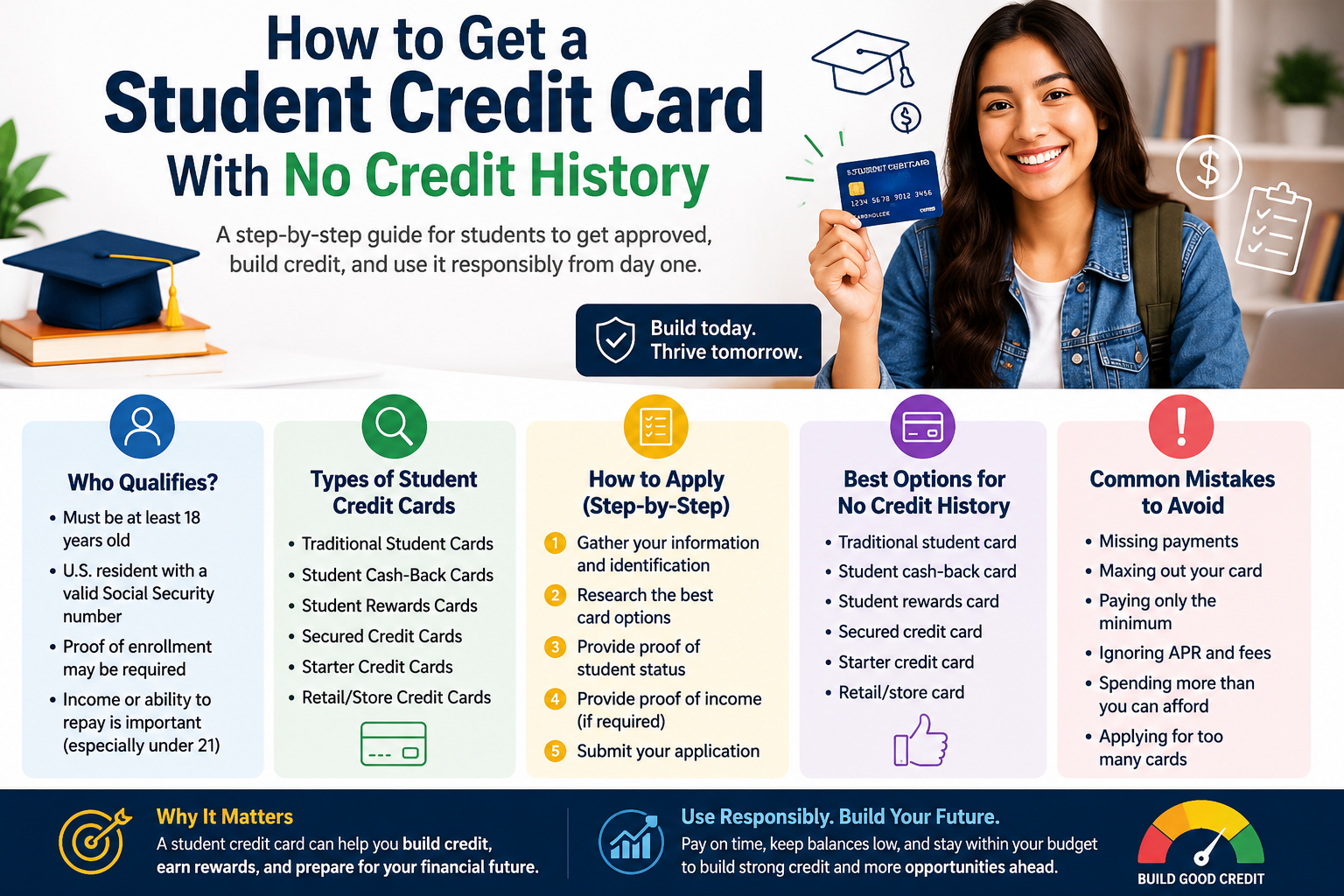
If you want a student credit card, you typically need to be at least 18 and enrolled in a college or another eligible program. Some card issuers might also ask you to show that you have enough income or funds to pay back what you spend.
A student credit card is not just a handy way to pay for daily expenses. It can also help you start building a good credit history. If you pay on time, keep your balance low, and avoid extra debt, you can develop smart credit habits early.
How do student credit cards work?
A student credit card lets you borrow money up to a certain limit, and you can keep using it as long as you pay back what you owe. Each month, you need to make payments and cover any interest or fees by the due date.
Your credit card use is reported to financial bureaus. If you use your card responsibly, such as by making payments on time, this can help build your credit history over time. A good credit history can make it easier to get a car loan, a mortgage, or even your first job after college. Remember, both positive and negative credit activity is recorded.
Here are some key things to keep in mind:
- Your credit limit is not extra money to spend. It simply shows the most you can borrow at one time.
- If you pay your statement balance in full, you can usually avoid paying interest on your purchases. Check your card’s terms to be sure.
- Try to keep your balance low compared to your credit limit. This helps you manage your credit responsibly.
- If you miss a payment, you might get charged late fees and interest, and your credit history could be affected.
- Review your monthly statement to catch incorrect charges, extra fees, or to find your payment due date.
- Using your student card for small, manageable purchases and paying them off regularly is an easy way to build good credit habits.
What’s the Difference Between a Student Credit Card and a Regular Credit Card?
Student Credit Card
Student credit cards are made for students, who often have shorter credit histories and different financial needs than other cardholders. Because of this, student cards usually have some key differences compared to regular credit cards:
1. Credit Limits:
Student credit cards usually come with lower credit limits than regular cards because most students are still building their income while in school. Your credit limit depends on your income and credit history, but it may be as low as $500 for a student card.
2. Fee Structure:
Many student credit cards, including reward cards, don’t charge annual fees. Some even waive your first late payment fee, recognizing that people new to credit may need time to adjust to regular bill payments.
3. Student Status:
A key difference between student and regular credit cards is how you qualify. Student credit cards are usually for people enrolled in an eligible school. When you apply, the issuer might ask for details about your school or your enrollment status.
4. Credit Score:
Student cards are usually meant for students and people with limited credit history. Some of these cards are open to applicants with little or no credit, but approval isn’t guaranteed. Your income, credit history, and the card issuer’s rules can still affect whether you’re approved.
5. Rewards and Benefits:
Student credit cards usually have fewer rewards and lower credit limits. Still, some of these cards give you cash back, points, sign-up bonuses, or other perks that can help with everyday student spending.
Credit Card
A credit card lets you borrow money from a bank to buy things, transfer balances, or take out cash up to a set limit. If you don’t pay off your full balance each month, you’ll have to pay interest on what you owe.
With rewards credit cards, you can earn cash back, discounts, travel points, and other perks that debit cards don’t offer. Some cards give rewards at a flat rate, while others offer different rates for different types of purchases.
How you use your credit card shows up on your credit report. Paying on time and keeping your balance low helps your report, while late payments or missed bills can hurt it. Lenders use this information to figure out your credit scores.
Types of Credit Cards
There are several different types of credit cards available:
- Standard cards: These usually offer a basic credit limit and often don’t charge an annual fee.
- Premium cards: These come with extra benefits like concierge services and airport lounge access, but they usually have higher fees.
- Rewards cards: These let you earn points, miles, or cash back on eligible purchases.
- Balance transfer cards: These help you move debt from one credit card to another, often offering a low introductory rate for a set time.
- Secured cards: These need a refundable security deposit, which usually acts as collateral for your credit limit.
- Charge cards: These often do not have a set spending limit, but you usually need to pay the full balance every month.
How to get a student credit card with no credit history
If you want a student credit card but have no credit history, follow a clear application process. Credit card companies will decide if you qualify. Some cards for people without a credit history may require a deposit or offer lower credit limits.
If you have no credit history, it means the main credit bureaus do not have enough information about your past use of credit. Without any credit accounts, there is nothing to help build your credit history. Because of this, credit bureaus might not be able to create a credit report or score for you. This is often called being “credit invisible.”
If you don’t have a credit history yet, you still have options. You can explore student credit cards, starter cards, secured credit cards, and other ways to build a positive credit history if you use them responsibly.
Before you apply, check each card’s requirements, fees, interest rates, credit limits, rewards, and how they report to credit bureaus. Picking the right card and paying your bills on time will help you build good credit habits.
Types of Student Credit Cards for People With No Credit History
If you are just starting out and do not have much credit history, there are student and starter credit cards that can help you build credit.
1. Traditional Student Credit Cards
- These cards are made for college and university students.
- Some of these cards accept students who have little or no credit history.
- They may offer cash back, rewards, or special student benefits.
- These cards usually have lower credit limits.
2. Student Cash-Back Credit Cards
- You can earn cash back on eligible purchases.
- Rewards often cover things like groceries, restaurants, gas, and more.
- Compare cash-back rates, fees, and APR before you apply.
3. Student Rewards Credit Cards
- These cards let you earn points, miles, or other rewards.
- You can use your rewards for travel, merchandise, or statement credits. These cards are a good choice for students who want to earn rewards while building their credit.
4. Secured Credit Cards
- You will need to provide a refundable security deposit.
- These cards can be helpful if you don’t qualify for an unsecured card.
- If you use the card responsibly and your payments are reported to credit bureaus, it can help you build your credit.
- Over time, some people can move up to unsecured cards.
5. Starter Credit Cards
- These cards are for people just starting to build credit.
- They often come with low credit limits and basic rewards.
- Look for cards with no annual fee that report your payments to the credit bureaus.
6. Retail or Store Credit Cards
- These cards are available through certain retailers.
- People with limited credit may find these cards easier to get.
- They sometimes provide discounts or rewards when you shop at the store.
- However, these cards often have high interest rates and can usually only be used at the issuing store.
To explore examples of credit cards designed for people with limited or no credit history, visit Discover Credit Cards for No Credit History.
Tip: Before you apply, look at the APR, annual fee, credit limit, rewards, other fees, and whether the card reports to credit bureaus. This will help you choose the best card for your needs.
Best Credit Card Options for a Student With No Credit History
| Card Type | Suitable for No Credit? | Main Advantage |
|---|---|---|
| Traditional Student Card | ✅ Often | Built specifically for students |
| Student Cash-Back Card | ✅ Some cards | Earn cash back while building credit |
| Student Rewards Card | ✅ Some cards | Earn points or other rewards |
| Secured Credit Card | ✅ Often | Easier alternative when unsecured cards aren’t available |
| Starter Credit Card | ✅ Often | Designed for people new to credit |
| Retail/Store Card | ⚠️ Sometimes | Potentially easier approval and a low starting limit |
Important: No particular credit card is guaranteed with no credit history. Credit card issuers make their own approval decisions, and eligibility requirements vary by card and applicant.
Step-by-Step Guide on How to Apply for a Student Credit Card With No Credit History
1. Gather Your Information/Identification
When you apply for a credit card, the company will ask for details such as:
- Full legal name
- Social Security number or Individual Taxpayer Identification Number
- Date of birth
- Address
- Email address
2. Research the Options Available to You
You can find many student credit cards to choose from. Some have low service fees or offer a 0% introductory APR, so you can make purchases without paying interest during the introductory period.
Some banks work with universities to give students special deals. Take time to compare your options and choose a card that fits your needs.
3. Student Status
You may need to show proof that you are enrolled in an eligible educational program, such as college, when you apply for a student credit card.
4. Proof of Income
You may need to provide proof of income, such as:
- Part-time job wages
- Allowances
- Financial aid/grants
Note: You need to be at least 18 years old to apply for a credit card. If you are under 21, you will also need to show proof of income to show you can make payments on your own.
5. Submit Your Application
After you collect all the required information and documents, you can submit your application. To make sure you have everything you need, visit one of our branches, and a staff member will guide you through the process.
Common Mistakes Students Should Avoid
Getting approved for a student credit card is just the beginning. To build a strong credit history and avoid debt, use your card wisely. Here are some common mistakes students should avoid:
- Applying for too many cards: Submitting several applications within a short period can make managing credit more difficult.
- Missing payments: Late or missed payments can lead to fees and negatively affect your credit history.
- Maxing out the card: Using most or all of your available credit can make it harder to manage your balance.
- Paying only minimum payments indefinitely: Minimum payments can keep you in debt longer and may result in more interest charges.
- Ignoring APR and fees: Always understand the card’s APR, annual fees, late fees, and other charges before applying.
- Using credit for expenses you cannot afford: A credit card should not be used to spend more than you can reasonably repay.
- Applying without checking eligibility: Review the card’s requirements before submitting an application.
- Giving inaccurate income information: Provide truthful and accurate information about your income and financial situation.
- Skipping financial education: Learn how credit cards, interest, credit scores, and credit reports work before using one.
- Relying too much on credit cards: A credit card should complement your budget, not become your primary source of money.
If you want to learn more about ways to establish or rebuild credit, the Consumer Financial Protection Bureau (CFPB) provides helpful guidance on how to start or rebuild a good credit history.
Frequently Asked Question (FAQs) About Student Credit Cards
1. How do I choose the best student credit card?
Look at the APR, annual fee, credit limit, rewards, other fees, and what you need to qualify. Pick the card that matches your budget and how you usually spend.
2. Do I need to have a job to apply for a student credit card?
Not always. Some students can qualify if they have other types of eligible income or financial resources. If you are under 21, you usually need to show that you can repay it on your own.
3. How old do I have to be to apply for a student credit card?
In the U.S., you usually need to be at least 18 years old to apply for a credit card.
4. What’s the difference between a student credit card and a regular credit card?
Student cards are designed for students and usually have lower credit limits and requirements for people with limited credit history.
5. How long does it take to build credit?
It takes time to build credit. If you pay your bills on time and use credit wisely, you can build a strong credit history.
6. Can I get a credit card without a job?
Yes, this may be possible if you have other eligible income or financial resources. Be sure to give accurate information when you fill out your application.
7. What is the easiest credit card to get with no credit history?
No option is guaranteed, but student and secured credit cards are often good choices for people who have little or no credit history.
Conclusion
If you have no credit history, you still have options for getting a credit card. Student cards, secured cards, and starter cards are some of the most common choices. Take time to compare these options and use your card carefully to start building good credit.